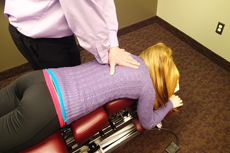
The Thompson Drop-Table Technique is a chiropractic method that uses a segmented treatment table to assist with spinal adjustments. Unlike manual techniques performed on a stationary table, this approach combines a chiropractor’s controlled thrust with a section of the table that drops slightly during the adjustment.
Understanding this difference can help people in Mt. Pleasant, South Carolina, make informed decisions about chiropractic care. Although both approaches involve manual techniques, the table’s movement changes how the adjustment is delivered and how the procedure may feel.
What Is the Thompson Drop-Table Technique?
The Thompson Technique uses a specially designed table with movable sections, often called drop pieces. These sections can be raised slightly and adjusted to respond to a controlled force during treatment.
When the chiropractor applies a brief thrust to the targeted area, the corresponding table section drops a short distance. This movement assists with the adjustment and is intended to reduce the amount of force that must be applied directly to the patient’s body compared with performing the same maneuver without the drop mechanism.
The technique is still a form of manual chiropractic manipulation. The difference lies in how the practitioner uses the table to support the procedure.
The approach may be considered for selected spinal movement concerns, but its suitability depends on the individual’s condition, examination findings, and medical history.
How Does a Drop-Table Adjustment Work?
A typical Thompson adjustment involves several steps, although the precise procedure varies according to the area being addressed and the practitioner’s approach.
Positioning on the Treatment Table
The patient lies on the table in a position that allows the chiropractor to access the targeted spinal region. The practitioner identifies the area to be assessed and positions the corresponding table section.
Proper positioning helps the practitioner deliver the intended force to the selected area while keeping the patient supported throughout the procedure.
Setting the Drop Section
The movable section is raised slightly and set according to the table’s design and the intended adjustment. The setup helps determine how the section responds when force is applied.
This mechanism is central to the Thompson Technique. Rather than relying entirely on the patient’s body to absorb the adjustment, the table contributes movement during the thrust.
Applying the Adjustment
The chiropractor applies a brief, controlled manual thrust to the targeted area. The table section then drops slightly before stopping, assisting the movement.
Patients may hear a mechanical clunk as the table moves. This sound can come from the equipment itself and does not necessarily indicate that a joint has released or that the adjustment has achieved a particular result.
How Does the Thompson Technique Differ From Other Manual Adjustments?
Traditional manual spinal adjustments generally involve a practitioner applying a controlled force directly to a selected joint while the patient is positioned on a stationary treatment surface.
The Thompson Technique also uses a manual thrust, but the segmented table adds a moving component to the procedure.
Several differences are worth understanding:
- Equipment: Thompson adjustments use a segmented drop table, while many manual adjustments are performed on a stationary surface.
- Force delivery: The drop mechanism assists the movement during the thrust. However, the actual force still depends on the practitioner, technique, table settings, and individual circumstances.
- Patient sensation: A drop-table adjustment may feel like a brief, cushioned movement accompanied by a mechanical sound. Other manual techniques may involve a more noticeable joint movement.
- Positioning: Both methods require appropriate positioning, but the practitioner may use different setups depending on the technique and treatment area.
Neither approach is automatically more effective than the other. The appropriate method depends on the patient’s needs and the clinical reasoning behind the recommendation.
Why Does the Table’s Movement Matter?
The drop mechanism is designed to assist the adjustment by allowing part of the table to move during the thrust. This changes the mechanics of the procedure and may influence how the force is transmitted through the body.
However, it is important not to assume that the table’s movement guarantees a gentler experience or better clinical results for everyone. The amount of force used and the patient’s response depend on several factors.
Research on the forces involved in chiropractic manipulation has examined how technique and practitioner application influence the mechanics of an adjustment. A study published in the Journal of Manipulative and Physiological Therapeutics measured forces during Thompson-style manipulation and found variation in force characteristics between practitioners and treatments.
This highlights why the technique’s name alone cannot establish how much force a particular patient will experience. Individual assessment and appropriate technique selection remain important.
Who May Consider a Thompson Drop-Table Adjustment?
Some patients prefer the drop-table method because it incorporates table movement rather than relying entirely on a manual thrust against a stationary surface. Others may find the positioning or sensation more comfortable than alternative approaches.
The technique may be considered when the clinical assessment supports its use for a particular spinal concern. However, it should not be assumed to be suitable for every person with back or neck discomfort.
Medical history matters. Conditions such as significant osteoporosis, suspected fractures, spinal instability, or certain neurological problems may require additional evaluation or make some forms of spinal manipulation inappropriate.
A previous spinal fusion or disc condition also does not automatically establish suitability. The practitioner must consider the specific circumstances before recommending an adjustment.
People who are uncertain about the procedure can ask for an explanation of the table’s movement, the intended purpose of the adjustment, and any alternatives available.
What Should Patients Expect During an Evaluation?
Before recommending a chiropractic technique, a practitioner should review the patient’s symptoms, relevant medical history, and movement limitations.
For example, someone experiencing lower-back stiffness after prolonged sitting may need a different assessment from someone who develops neck pain following an injury. Similar symptoms can have different causes, so treatment should not be selected based only on where discomfort occurs.
A discussion may include when symptoms began, which activities affect them, whether they travel into an arm or leg, and whether weakness or numbness is present.
If the findings suggest a condition requiring medical evaluation, the patient may need further assessment before any spinal manipulation is considered.
How Can Patients Compare Chiropractic Techniques?
When comparing chiropractic methods, patients should look beyond the equipment or the sound produced during treatment. Useful considerations include the purpose of the technique, the evidence supporting its use for the relevant condition, potential risks, and the practitioner’s explanation of expected outcomes.
A patient may ask:
- Why is this technique being recommended for my condition?
- How does the drop table change the adjustment?
- What risks or precautions apply to my medical history?
- Are other approaches available?
- How will progress be assessed?
These questions can help clarify the reasoning behind the treatment plan and establish realistic expectations.
People exploring chiropractic care in Mt. Pleasant can learn more about the approaches described by a Chiropractic physician and discuss which options may be appropriate for their circumstances.
Understanding Your Options for Chiropractic Care
The Thompson Drop-Table Technique differs from other manual methods because it uses a segmented table that moves during the adjustment. Although the table assists the procedure, the chiropractor still applies the manual force, and the technique must be selected according to the individual’s needs.
For residents in Mt. Pleasant, understanding how drop-table and conventional manual adjustments differ can make treatment discussions more useful. A careful assessment, a clear explanation of the proposed method, and realistic expectations are important parts of making informed decisions about spinal care.